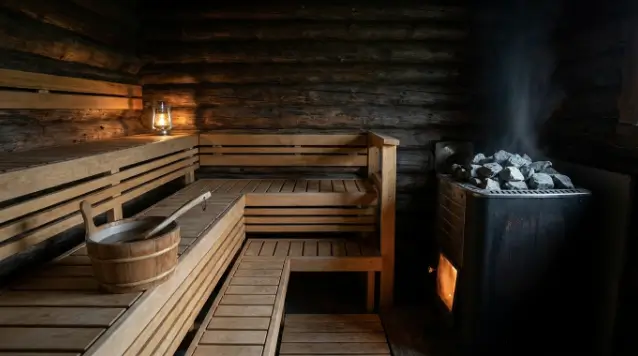
A traditional sauna heats the air to 170 to 190 degrees Fahrenheit with an electric or wood-fired heater and offers steam, while an infrared cabin warms the body directly at 120 to 150 degrees with no steam option. On a budget, infrared usually wins on sticker price and setup cost, typically $1,800 to $3,000 with no new wiring, while a basic traditional cabin runs $3,500 to $6,000 once a heater and circuit are included. The right choice depends less on price alone and more on what kind of heat experience someone actually wants three sessions into a normal week.
How Does the Heat Itself Actually Differ?
Traditional heat warms the air around you, and pouring water over hot rocks (called löyly) adds a burst of humidity that most longtime sauna users say is central to the experience. It is an intense, whole-room heat that most people notice within a few minutes of sitting down. Infrared panels, whether carbon or ceramic, warm the body more directly through infrared wavelengths at a lower ambient air temperature, which some people find gentler and easier to tolerate for longer stretches. Neither is more effective in some universal sense. Someone who grew up with a wood-fired sauna in a cabin up north is rarely satisfied by an infrared unit, and someone sensitive to very hot, humid air often prefers infrared specifically because it avoids that sensation.
What Does Each Option Actually Cost Installed?
The unit price is only part of the real cost. An infrared cabin plugging into a standard 120-volt outlet needs no electrical work in most homes, which keeps the all-in cost close to the sticker price. A traditional heater rated above 6 kilowatts, which covers most cabins built for two or more people, typically needs a dedicated 240-volt circuit, and that electrician visit commonly adds $400 to $1,200 depending on distance from the panel. Outdoor traditional cabins may also need a pad or small foundation. None of this makes traditional a bad value, since a well-built cedar cabin holds up for well over a decade, but it does mean the true budget comparison has to include installation, not just the price tag on the unit.
Which One Fits a Smaller Home Better?
Infrared cabins tend to have a real footprint advantage for apartments, condos, and homes without spare electrical capacity, since a single-person unit can fit in a spare closet-sized space and run off an outlet that already exists. Traditional cabins need enough clearance around the heater, typically several inches on all sides per the manufacturer’s guard specification, plus room for the electrical run. For a small backyard or a tight basement corner, a compact 4×4 traditional cabin can still work, but it demands more planning around wiring and clearance than dropping in an infrared unit does.
Where Should Budget Shoppers Start Looking?
Shoppers set on the traditional heat and steam experience but working with a tighter budget should compare entry-level cedar cabins across a few retailers rather than buying the first listing that comes up, since heater wattage, wood species, and whether rocks are included vary more than the sticker prices suggest. Sites including Auroom, Sauna360, and sweatdecks.com list traditional models at different price points, and checking whether the heater and starter rocks are bundled into the price is worth five minutes before ordering, because that detail alone can shift the real cost by several hundred dollars.
How Do Long-Term Costs Compare?
Electricity use tips toward infrared for day-to-day running cost, since panels draw less power and reach usable heat faster, but the gap is smaller than marketing sometimes implies once you account for a traditional heater’s shorter run time before it stops cycling once the cabin holds temperature. Maintenance differs more meaningfully. A traditional cabin needs occasional rock replacement, since rocks crack under repeated heat cycling, and the wood benefits from an occasional light sanding. Infrared panels have no moving parts to maintain but do lose output gradually over thousands of hours of use, and replacing a failed panel on an older unit can be harder than sourcing rocks for a traditional heater.
See also:
How Do the Two Compare for a Household That Shares It?
Capacity is where the gap widens fastest. A budget infrared cabin is often built for one or two people sitting upright on a single bench, and adding capacity tends to raise the price sharply since it means more panels and a bigger footprint. A traditional cabin scales more gradually: a 4×6 two-person build and a 6×6 four-person build use largely the same construction approach, tiered benches, tongue-and-groove cedar or spruce paneling, a single heater sized up for the extra volume, so the jump in cost per additional person is smaller than it is with infrared. For a couple or a family planning to use the sauna together regularly rather than solo, that scaling difference often matters more than the sticker price on the smallest available unit of either type. It is also worth asking how many people will realistically use the sauna at once, since a cabin sized for four but used solo most weeks wastes both money and heating time, while one sized for two that a family of four tries to share on weekends creates its own frustration.
Is There a Health Reason to Prefer One Over the Other?
Most of the published research on sauna and cardiovascular outcomes comes from traditional Finnish-style sauna use, not infrared. Large cohort studies have found regular traditional sauna use associated with lower rates of fatal cardiovascular events and all-cause mortality, and follow-up research has looked at blood markers of cardiovascular function after short-term sauna sessions in experienced users. Infrared has a smaller and less consistent research base behind it, which does not mean it lacks benefit, only that the strongest evidence available currently points toward traditional heat exposure specifically. Anyone choosing based partly on health goals should weigh that difference in the evidence, while remembering these are population-level associations, not a guarantee for any one person.
Frequently Asked Questions
Is a traditional sauna or infrared cabin cheaper to buy? Entry-level infrared cabins are usually cheaper up front, often $1,800 to $3,000, while a basic traditional cedar cabin with a heater runs $3,500 to $6,000.
Which type of sauna heats up faster? Infrared cabins typically reach usable heat in 10 to 15 minutes, while a traditional sauna takes 30 to 45 minutes to reach 170 to 190 degrees.
Do traditional saunas need special electrical work? Most heaters above 6 kilowatts need a dedicated 240-volt circuit. Many infrared cabins run on a standard 120-volt outlet.
Which sauna type lasts longer? A well-built traditional cedar sauna commonly lasts 15 to 25 years with basic upkeep, while infrared panels are typically rated for 5,000 to 10,000 hours.
References
- Association between sauna bathing and fatal cardiovascular and all-cause mortality events, JAMA Internal Medicine, 2015
- Joint associations of sauna bathing and cardiorespiratory fitness on cardiovascular and all-cause mortality risk: a long-term prospective cohort study, Annals of Medicine, 2018
- Short-term effects of Finnish sauna bathing on blood-based markers of cardiovascular function in non-naive sauna users, Heart and Vessels, 2018
By Renee Castellano